
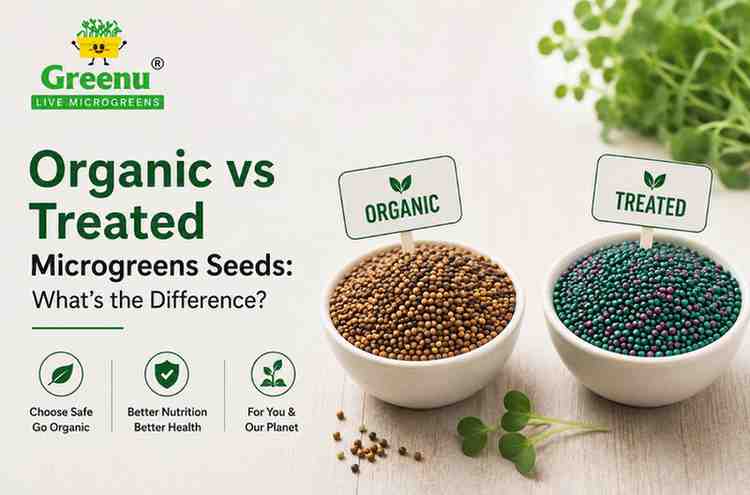
Whether you’re growing microgreens at home or starting a commercial setup, selecting the right seeds is the first and most important step. Many beginners often come across two common options—organic microgreens seeds and treated microgreens seeds. At first glance, they may look similar, but the difference lies in how they are produced, handled, and intended to be used.
Since microgreens are harvested and eaten at a very young stage, the quality and safety of the seeds directly influence the final crop. Understanding these differences helps you make better choices for healthier harvests, improved taste, and greater peace of mind.
This guide explains everything you need to know before buying seeds for your next microgreens crop.
What Are Microgreens Seeds?
Microgreens seeds are the seeds of vegetables, herbs, legumes, and grains that are grown specifically to produce tender seedlings harvested within 7 to 21 days.
Popular microgreens seeds include:
- Broccoli
- Radish
- Mustard
- Kale
- Fenugreek
- Sunflower
- Pea
- Cabbage
- Beet
- Basil
Since the entire young plant is consumed, seed quality is extremely important.
Understanding Organic Microgreens Seeds
Organic seeds come from plants grown without synthetic pesticides, chemical fertilizers, or genetically modified organisms (GMOs). These seeds are produced following certified organic farming practices that focus on sustainability and environmental health.
Key Features
- Produced using natural farming methods
- Free from synthetic chemical treatments
- Non-GMO in most certified programs
- Suitable for organic gardening
- Safe for edible sprouts and microgreens
Organic seeds are popular among people who prefer clean eating and environmentally responsible farming.
What Are Treated Microgreens Seeds?
Treated seeds are coated with chemical fungicides, insecticides, or other protective substances before packaging. These treatments help protect seeds from soil-borne diseases and pests during conventional farming.
The coating may appear as a colored layer—commonly pink, blue, green, or red—to indicate that the seeds have been treated.
These seeds are generally designed for field cultivation rather than for producing edible sprouts or microgreens.
Organic vs Treated Microgreens Seeds: What’s the Difference?
Understanding the major differences helps growers select the most suitable option.
| Feature | Organic Seeds | Treated Seeds |
|---|---|---|
| Chemical Coating | No | Yes |
| Safe for Microgreens | Yes | Usually No |
| Organic Farming | Yes | No |
| Edible Seedlings | Recommended | Generally Not Recommended |
| Environmental Impact | Lower | Higher |
| Growing Method | Natural | Conventional |
For microgreens, untreated and food-safe seeds are usually the preferred choice.
Why Seed Choice Matters for Microgreens
Unlike mature vegetables, microgreens are harvested only a few days after germination. This means the young plants are eaten while they are still closely connected to the seed.
Using high-quality, untreated seeds helps ensure:
- Better food safety
- Healthy germination
- Fresh flavor
- Strong plant growth
- Cleaner harvests
Since microgreens are often eaten raw, starting with safe seeds is essential.
Benefits of Organic Microgreens Seeds
Cleaner Growing Experience
Organic seeds are produced without synthetic chemical coatings, making them a preferred option for edible greens.
Better for Sustainable Farming
Organic farming supports biodiversity, healthier soil, and reduced chemical pollution.
Excellent Germination
High-quality organic seeds often deliver consistent germination rates when stored and handled correctly.
Ideal for Home Growers
People growing microgreens indoors generally prefer organic seeds because they are specifically intended for edible crops.
Supports Healthy Eating
Organic microgreens fit well into diets focused on fresh, minimally processed foods.
Are Treated Seeds Safe for Microgreens?
This is one of the most common questions among beginners.
The answer is simple:
Most treated seeds are not recommended for growing sprouts or microgreens intended for human consumption because their chemical coatings are designed for agricultural field production.
Always read the seed packaging carefully before use.
If the packet states “Not for Human Consumption” or “Treated Seed,” avoid using it for microgreens.
How to Identify Organic Seeds
When shopping for seeds, look for:
- Organic certification
- Non-treated label
- Non-GMO indication
- Sprouting or microgreens suitability
- Trusted supplier information
- Batch and packaging details
Buying from reliable suppliers reduces the risk of poor-quality seeds.
Common Mistakes People Make When BuyingSeeds
Many new growers accidentally purchase seeds meant for farming instead of microgreens.
Avoid these mistakes:
- Buying the cheapest seeds available
- Ignoring package instructions
- Using treated agricultural seeds
- Choosing old or expired seeds
- Purchasing from unknown sellers
Spending a little more on quality seeds often leads to better harvests.
Tips for Growing Healthy Microgreens
Regardless of the seed type, follow these best practices:
- Use clean trays and equipment.
- Soak seeds only when recommended.
- Maintain proper airflow.
- Water lightly to prevent mold.
- Harvest at the correct stage.
- Store harvested microgreens in the refrigerator.
Proper growing conditions improve both yield and quality.
Which Seeds Are Best for Beginners?
If you’re just starting, choose varieties known for easy germination:
- Broccoli
- Radish
- Sunflower
- Pea
- Mustard
- Kale
These are beginner-friendly, fast-growing, and highly nutritious.
Are Organic Seeds Worth the Extra Cost?
Organic seeds may cost slightly more, but many growers find the investment worthwhile because they offer:
- Peace of mind
- Better food safety
- Sustainable production
- High-quality harvests
- Excellent flavor
- Reliable germination
For anyone growing food to eat fresh, seed quality should always be a priority.
Final Thoughts: Choose Seeds That Match Your Purpose
When comparing organic vs treated microgreens seeds, the right choice depends on how you plan to use them. If your goal is to grow fresh, edible microgreens for daily meals, untreated organic seeds are generally the preferred option because they are produced without synthetic chemical coatings. Treated seeds may have benefits in conventional agriculture, but they are not usually intended for edible microgreens.
Reading seed labels, buying from trusted suppliers, and following proper growing practices will help you enjoy healthier harvests and a more successful growing experience.
Greenu – Grow Fresh, Eat Better
Choosing premium seeds is the first step toward growing healthy microgreens, and Greenu is committed to making that journey easier. Whether you’re a home gardener or a commercial grower, Greenu offers carefully selected microgreens seeds that are suitable for producing fresh, nutritious harvests. With a focus on quality, reliability, and sustainable growing, Greenu helps you enjoy better germination and vibrant greens. Start your microgreens journey with confidence by choosing trusted seeds from Greenu for healthier harvests every time.
Frequently Asked Questions (FAQs)
1. What is the difference between organic and treated microgreens seeds?
Organic microgreens seeds are produced without synthetic chemical treatments, while treated seeds are coated with fungicides or pesticides for conventional farming. Organic or untreated seeds are generally preferred for growing edible microgreens.
2. Can I use treated seeds to grow microgreens?
It is generally not recommended. Treated seeds are intended for agricultural planting and may contain chemical coatings that are unsuitable for edible sprouts and microgreens. Always check the seed label before use.
3. Are organic microgreens seeds better?
Organic microgreens seeds are often the preferred choice because they are free from synthetic chemical coatings, suitable for edible crops, and support environmentally friendly farming practices.